Monday, April 09, 2007

April 2007 Show


Western Left and Iranian Liberalism - lessons to learn
KBOO 90.7 FM
Thursday 4/12/07 6:00 PDT

Click here to listen to a recording of this Interview!

If you are interested in the topic of Iranian Liberalism and Western Left, I am interviewing Danny Postel writer of the book "Reading Legitimacy Crisis in Iran" on my radio program on KBOO 90.7 FM at 6 PDT coming Thursday 4/12/07 program is webcast at www.kboo.fm click on the listen live icon. Danny has just come back from a two weeks trip to Iran in March. Just to give you an exposé to the book, I suggest following review by Rafia Zakaria.

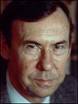
Danny Postel is a journalist and critic living in Chicago. He is a Senior Editor of openDemocracy, an online global magazine of politics & culture; a Contributing Editor to Dædalus, the journal of the American Academy of Arts & Sciences; a member of the editorial board of The Common Review, the magazine of the Great Books Foundation; and an Editor-at-Large of Stop Smiling.

In 1991 he was on the editorial collective of Left Green Notes, the magazine of the Left Green Network. From 1996-1999 he hosted Free Associations, a weekly radio show in Chicago about politics, culture, and books. In 2000-2001 he was editor of philosophy and then history & humanities at Britannica.com, the late online magazine of Encyclopædia Britannica. From the fall of 2001 until the spring of 2003 he was a staff writer for The Chronicle of Higher Education, where he covered philosophy, history, political theory, Middle Eastern studies, and African studies.

He has taught journalism at Columbia College in Chicago; English as a Second Language at St. Augustine College and at the Howard Area Community Center in Chicago; and Spanish in a Chicago elementary school. He is the author of Reading Legitimation Crisis in Tehran: Iran and the Future of Liberalism, forthcoming from Prickly Paradigm Press in October, and the editor of The Shadow of Kosovo, an anthology exploring the debate amongst leftists over the Kosovo war, forthcoming from Cybereditions.

Reading Legitimation Crisis in Iran
Iran and the Future of Liberalism

Wednesday 4 April 2007
Rafia Zakaria

An indictment of the Western Left, which has abandoned Iranian liberals in their fight for freedom and democracy.

IN unravelling the grand universalism of the Modern project, post-modern thinkers arrived at a conception of authenticity that eschewed the imposition of Western ideas on the misunderstood `other'. They proclaimed the death of universalism and left behind a philosophical legacy that presented diverging paths for the Western and non-Western world. For the Western Left, the acknowledgement of complicity in the exploitative projects of colonialism and the recognition of the distorted perspectives of orientalism brought in its wake an unquestioned veneration of those aspects of the non-Western `other'. For the non-Western world, the post-modern legacy meant the rejection of all that bore the imprimateur of the oppressive `other' and led to a search for a pre-colonial truth unmarred by Western influence. In the ideological confusion that followed, religious fundamentalism clothed itself in the robes of authenticity and produced a political discourse that thrives on the crude evaluative principle that ideas have singular geographical sources that dictate the status of their authenticity and relevance. In countries such as Iran, anti-imperialist arguments have been appropriated by theocracy and religious faith manipulated as a means to delegitimise any and every form of dissent.

The unfortunate geopolitical cataclysm resulting from these divergent prescriptions and the subsequent stagnation of the Western left are the subjects of Danny Postel's short volume entitled Reading Legitimation Crisis in Tehran: Iran and the Future of Liberalism. Based on an engaging play of words, the title of the book draws from liberal philosopher Jurgen Habermas' volume entitled Legitimation Crisis and Azar Nafisi's recent book Reading Lolita in Tehran. Postel argues that observing liberalism through an Iranian lens reveals the failure of the Western Left to emerge from the myopia that prevents it from accepting the reality that the `other' can engage with and have indigenous connections with ideas that may be punctuated by similarity rather than difference. In honing in on this, Postel identifies how the limitations that bound the orientalists of yore have indentured a new breed of Western leftists in a different but equally lethal servitude. These new prisoners, indoctrinated to expect only difference from the `other' are as indignant in their fervour to discard similarity as their orientalist predecessors were to fetishise the `other'.

In a succinct but hard-hitting argument, Postel uses the case of Iran to illustrate how liberal movements within Iran have begun the arduous but necessary political project of extricating liberal ideas from the snare of automatic delegitimisation at the hands of fundamentalist theocrats. Postel frames his introductory argument against Nafisi's brilliant explication of how reading any text within a certain context, regardless of its distance from the point of production, provides novel insights and sources of introspection. In Nafisi's own words: "[T]he West's gift[s] to us have been Lolita and [The Great] Gatsby, while Iran's gift to the West has been reasserting those values that you now take for granted." The dialogue between civilisations thus construed is not as a reductionist exchange of two alienated `others' defined solely by their differences. Instead it emerges as an interchange in which "landscapes and localities undergo symbolic metamorphoses, and that experiences once localised at a given place increasingly find echoes or resonance chambers among distant societies and peoples".

Postel goes on to describe how the "renaissance of liberalism" taking place in Iran relies not simply on a blind and ravenous consumption of the writings of liberal thinkers such as John Stuart Mill, Isaiah Berlin and Karl Popper. It is instead a process that combines the ideas of liberal thinkers with liberal concepts in Iranian history. Postel's use of this dual approach, which indigenises liberalism through an analysis of the liberal origins of the Iranian constitutional revolution of 1905-1911, gives liberal ideas an identity that is both authentically Iranian and contextually relevant. Through interviews with Iranian intellectuals such as Ramin Jehanbegloo - in jail since 2006 for his support for liberal ideas - Postel guides the reader into a country where a resuscitated liberalism is the subject of vibrant debate amid an engaged public that is hungry for reform and committed to the liberal principles of respect for human rights, democracy and the rule of law.

The most astute argument presented by Postel is his revelatory account of how Western leftists, by prioritising their own opposition to American imperialism, have abandoned Iranian liberals in their fight for freedom and democracy. Postel vehemently renounces the argument that support for pro-democracy interests in Iran somehow amounts to supporting the neo-conservative agenda. He presents engaging ideas as to how Iranian liberals have accomplished this very task. He relates in detail how Iranian human rights activists such as Akbar Ganji shun any contact with the United States government when visiting the country and focus solely on engaging with scholars, human rights organisations and civil society groups. Postel recounts an incident in which Nobel Peace laureate Shirin Ebadi, during a visit to the U.S., was confronted by an anti-war protester who suggested that she stop talking about human rights abuses in Iran because her arguments could be appropriated by the neo-conservatives. Ebadi's response was clear and unequivocal: "Any anti-war movement that advocates silence in the face of tyranny can count me out." Iranian intellectuals, despite being in the direct line of fire of the neo-conservative military agenda, are demonstrating that fighting the expansionist military agendas of the Bush administration does not require silence about the injustices perpetrated by the Iranian regime.

. Western Liberals' silence

This same conundrum confounds Western liberals. They, as Postel documents, have been silent in the face of repeated student protests in Iran, imprisonment of Iranian activists and numerous other human rights violations that should have logically attracted their support. They are so locked in the singular prism of anti-imperialism that they are unable to make peace with the idea that it is liberalism rather than radicalism that is the true fighting creed in Iran. They are even less amenable to the reality that "the denunciations of U.S. Empire in Iran today are the rhetorical dominion of the Iranian Right, not the Left". As Postel states, "it is the reactionary clergy who wield the idiom of anti-imperialism and regime hardliners [who] legitimate the suppression of Iranian students". This aversion to recognising reality in Iran has exacted a huge cost; it has delegitimised the Western left and exposed its disinterest in championing the cause of Iranian liberals and pro-democracy fighters who suffer daily at the hands of an increasingly repressive regime. Postel exposes how the insistent prioritisation of anti-imperialism over all else has produced a repugnant inversion of itself - a new form of imperialism equally blind in its U.S.-centric perspective as its ugly counterpart.

Postel's conception of the `other' imperialism draws heavily from his discussion of Janet Afary and Kevin Anderson's book Foucault and the Iranian Revolution: Gender and the Seductions of Islamism (University of Chicago Press, 2005). The connection to this recent work that documents Foucault's writings on Iran and his naïve fascination with the Iranian revolution as a positive project of "political spirituality" is important because it places the current reluctance of the Western left to get involved with Iran in the context of post-modern philosophical thought. As Postel argues in his discussion of Afary and Anderson's work, Foucault's stance on Iran was marked by a rejection of the scepticism that characterised his stance on Western institutions of power. Instead Foucault adopted a heady and misguided optimism that embraced theocracy because of its sheer "difference" rather than its ability to govern equitably and respect human rights. The discussion of Foucault's encounter with Iran is also important because it presents how post-modern philosophical estimations of the `other' have evolved out of what is judged by Westerners to be most authentic about the `other' - in this case the most exotic and most different aspects of Islam. Despite its brevity, Postel's work raises urgent questions about the orientation of the Western left towards pro-democracy movements in different parts of the world. He deftly deconstructs how judging the "other" through the ethnocentric lens of Western philosophical ideas and political imperatives is to blame for the geopolitical messes that define contemporary world politics. Opposition to neo-conservative agendas and military intervention should not mean ignorance of local forces fighting oppression from a different source. The result of the configuration that Postel exposes is that engagement with struggles for liberty and the rule of law has been duplicitously cast in `all or nothing' terms. Involvement is equivocated with supporting the neo-conservative zeal of the Bush administration and opposition is understood as the knowing ignorance and lack of support for those who may fight a different but equally repressive enemy.

This book is a timely indictment of the Western left's apathy, which justifies itself by constructing a deceptively dualistic model of Western engagement with the world. The time has come for the emergence of a new "radical" liberalism that rejects such misguided political perversions and reclaims the right to both engage with the struggles of human rights defenders and pro-democracy activists in Iran and elsewhere, and denounce the Bush administration's tyrannical politics of military intervention.

Sunday, March 18, 2007

Bread and Roses March 16th, 2007

Gabriele Ross interviews Jamila, Isra, and Saba 3 women from Afghanistan, Iraq, and Iran about the situations in those countries after the war on Iraq and Afghanistan and the likelihood of an attack on Iran.

click here to listen!

Friday, March 09, 2007

March 2007 Show


From "the End of History" to Neocons Orientalism

Listen to this interview -Click Here! or go to Iranian.com!
I interviewed Professor Hamid Dabashi on March 8th, 2007 by phone as part of my KBOO 90.7 FM program “Voices of the Middle East.” The main occasion for the interview was the recent release of his book “Iran, a people interrupted.” by the New Press. The book is mainly the bicentennial history of Iran, but it also refers to more than just the History. It covers a parallel path of political as well as cultural and literary developments in Iran.


Dr. Dabashi is definitely a committed believer of Edward Said’s view point of anti-colonialist critique of Orientalism, a person he worked with at Columbia. He is at the center of recent controversial criticism of American Neo-Conservatives and their Iranian counterparts. His passionate responses to my questions about this issue came after a more detailed inquiry of his critique of the Fukuyama’s notion of the “End of History”.

We started with philosophical bases of his book such as the struggle between Modernity and Tradition and concluded with the US tragedies in the Middle East and his solution to end that catastrophe. I am offering this recording to the young-generation-Iranians living in the US and Europe as well as those who find access to the Internet elsewhere in response to Dr. Dabashi’s specific interest to outreach to them.

Born on June 15, 1951 into a working class family in the south-western city of Ahvaz in the Khuzestan province of Iran, Hamid Dabashi received his early education in his hometown and his college education in Tehran, before he moved to the United States, where he received a dual Ph.D. in Sociology of Culture and Islamic Studies from the University of Pennsylvania in 1984, followed by a postdoctoral fellowship at Harvard University.

He is the Hagop Kevorkian Professor of Iranian Studies and Comparative Literature at Columbia University in New York, the oldest and most prestigious Chair in Iranian Studies. Professor Dabashi has written 12 books, edited 4, and contributed chapters to many more. He is also the author of over 100 essays, articles and book reviews in major scholarly and peer reviewed journals on subjects ranging from Iranian Studies, Shi’ism, Medieval and Modern Islamic Intellectual History, Comparative Literature, World Cinema, Trans-aesthetics, Trans-national Art, Philosophy, Mysticism, Theology, Post-colonial Theory and Cultural Studies.

Saturday, February 24, 2007

Attacking Iran? If I did it, here is how!

An article by Gouidarz Eghtedari analysing the situations regarding Iran and threat of a US-Israeli attack, @ Iranian.com (click here)

Sunday, February 11, 2007

February 2007 Show

US moves to prepare for an all out attack on Iran. Is this threat real? Who benefits from it and why? Goudarz shares his prediction based on information he has acquired in the past few months.

Click here to listen to this all commentary and talk show.

Wednesday, December 13, 2006

Dec. 2006 Show


Thursday December 14, 2006 - 6 PM
KBOO 90.7 FM
Click here to listen to this program!

The Baker-Hamilton report and recommendations
A regional point of view.
An interview with Trita Parsi, Ph.D.

Dr. Trita Parsi is the author of the forthcoming book Treacherous Triangle - The Secret Dealings of Iran , Israel and the United States (Yale University Press, 2007.) He is also the President of the National Iranian American Council (NIAC), the largest Iranian-American organization in the US.

Tuesday, November 21, 2006

Nov. 2006 Show


Thursday at 6PM PST
KBOO 90.7 FM
live at www.kboo.fm

A lecture delivered by Professor Gary Sick at Reed College's Public Policy Series. Dr. Sick has served on National Security Council during Presidents Ford, Carter and Reagan and currently teaches at Columbia University. He is director of the Gulf 2000 Project a research think tank on security and development in the Persian Gulf Region.

Click here for this broadcast.

Tuesday, October 10, 2006

Oct. 2006 Show


Alison Weir, Executive Director of "If Americans Knew"
Thursday Oct 12th at 6 PM.
KBOO 90.7 FM or webcast at www.kboo.fm
Click here to listen on-demand

Ms. Weir will speak in Portland on Oct. 14 (Sat. 7:30 pm) at Central Lutheran Church, 1820 NE 21st Ave.

She is a national expert and award-winning investigative journalist on U.S. media coverage of the Israeli-Palestinian conflict, documenting media bias statistically, etc.. Recently her organization released a study on The Associated Press newswire, which was partly motivated by the Oregonian news editors telling us that the AP is the "gold standard." She'd be especially timely as Jimmy Carter's book "Palestine: Peace not apartheid" comes out Nov. 15.

Weir has provided briefings on Capitol Hill and her speech at the Center for Policy Analysis in Washington D.C. was broadcast nationally on C-Span. Harvard Law School, Columbia, Stanford, Berkeley, the Fletcher School of Law and Diplomacy, and the Naval Postgraduate Institute are among the numerous universities and colleges where she has been invited to speak.

Thursday, September 14, 2006

September 2006 Show

September 14, 2006
6-7 PM
KBOO 90.7 FM

Clisk here to listen to this program on-line.

Please join me in a live interview with Chris Toensing and Farideh Farhi about the impacts of the 9-11response on the Middle East, and Iranian nuclear crisis.

Farideh Farhi is an independent researcher and an adjunct professor of political science at the University of Hawaii, Manoa. Her publications include States and Urban-Based Revolutions in Iran and Nicaragua (1990), as well as numerous articles and book chapters on comparative analysis of revolutions, contemporary Iranian politics and foreign policy. She recently returned from several months in Iran. She writes: "Should the US join its European allies in offering to assist Iran with nuclear power generation, this time without preconditions, the resulting negotiations could resolve not only the nuclear issue, but larger concerns as well, an outcome that may well benefit the whole region."

Chris Toensing is editor of Middle East Report and executive director of the Middle East Research and Information Project. Toensing has written for the Los Angeles Times, The Nation, The Progressive and other US newspapers and magazines, and has appeared hundreds of times on radio and TV programs to discuss Middle East politics. He commented today: "What was once beyond the pale -- the idea that the September 11 attacks should have been treated as crimes against humanity instead of acts of war -- has now almost become common sense. If the US had pursued that route, much of the death and destruction that followed September 11 could have been avoided."

Sunday, June 11, 2006

June 2006 Show

Ervand Abrahamian
US and Iran Relations - Ups and Downs,
an interview with Professor Ervand Abrahamian


Thursday June 8th, 2006 at 6 PM

For listening to this program click here!
Ervand Abrahamian is a CUNY Distinguished Professor in the department of history, Baruch College and the Graduate Center in the City University of New York. He has written a number of books on modern Iran, including Iran Between Two Revolutions, The Iranian Mojahedin, Khomeinism, Tortured Confessions and most recently Inventing the Axis of Evil: The Truth About North Korea, Iran and Syria, coauthored with Bruce Cumings and Moshe Mo'az. He said today: "Secretary of State Condoleezza Rice's recent statement about America's willingness to talk to Iran has another more important modification in US position, that the US is willing to accept Iran's civil nuclear program. This is different from the earlier US position that Iran could not be trusted with any nuclear program. Iran may take the opportunity to explore this modification."

Saturday, May 06, 2006

May 2006 Show


Live interview with Dr. Shirin Ebadi
The 2003 Nobel Peace Laureate.

Thursday May 11th, 2006
6-7 PM KBOO 90.7 fm
To listen to this Radio interview click here!
Click here to listen to Dr. Ebadi's lecture in Portland:
~in English
~in Persian!


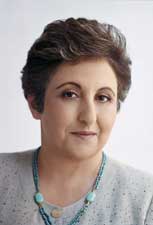
Shirin Ebadi is an attorney and former judge who has worked passionately for the rights of the politically oppressed in Iran for over 30 years. The first Muslim woman to win the Nobel Prize, she asserts that it is patriarchal attitudes in the Muslim world that restrict human rights, not Islam itself, which she views as a religion of peace and tolerance. A vocal opponent of foreign interference in Iran’s domestic politics, she will challenge our thinking about the future of Islamic societies.

Dr. Ebadi will be the World Afairs Council of Oregon's International Speakers Series Guest at Arlene Schnitzer Concert Hall, 7:00 p.m., Friday, May 19, 2006

Wednesday, March 29, 2006

April 2006 Show


Plan to attack Iran--Fool Me Twice!
Thursday April 13th, 2006
6-7 PM (PST)

Click here for on-line archive of this interview!

Recently several articles in the US and UK have pointed out the administration’s planning of attacks on Iran. Seymore Hershe’s New Yorker report is the latest with details on why and how these attacks are being developed. Joseph Cirincione a month ago revealed the same story in an article for the Journal of Foreign Policy, titled “Fool Me Twice”.

In the first part VOME program hosts Joe Cirincione for a live interview about this issue and the Iranian nuclear program and its potential threat (if any). Second part of the show covers the paper recently published about Israel Lobby and US Foreign Policy in an interview with Jeff Blankfort.

Joseph Cirincione is the Director for Non-Proliferation at the Carnegie Endowment for International Peace and author of Deadly Arsenals: Nuclear, Biological and Chemical Threats, (Second Edition, 2005) and co-author of Universal Compliance: A Strategy for Nuclear Security (March 2005). He teaches at the Georgetown University Graduate School of Foreign Service and is one of America’s best known weapons experts, appearing frequently in print and on FOX News, CNN, ABC, NBC, PBS, NPR and occasionally on Comedy Central.

Cirincione worked for nine years in the U.S. House of Representatives on the professional staff of the Committee on Armed Services and the Committee on Government Operations. He is a member of the Council on Foreign Relations and the International Institute for Strategic Studies.

Joseph Cirincione appeared in the 2005 award-winning documentary, "Why We Fight," by Eugene Jarecki. He is the author of numerous articles on proliferation and weapons issues, a co-author of WMD in Iraq: Evidence and Implication (January 2004), the editor of Repairing the Regime (Routledge, 2000) and producer of the award-winning DVD, The Proliferation Threat.

Fool Me Twice


Second Part: Israel Lobby and US Foreign Policy
Two Political Science scholars, professors John J. Mearsheimer of the University of Chicago's Department of Political Science and Stephen M.Walt of Harvard University's Kennedy School of Government recently published a research paper about “The Israel Lobby and U.S Foreign Policy”.

The 83-page Mearsheimer-Walt paper is a downloadable PDF file at the following links:

Original research paper as was initially released.

Sunday, March 12, 2006

Against the Next War?

I am not affiliated with any of the following organizations but I support their cause to stop the nexr war before it starts:

Thursday, March 09, 2006

March 2006 Show;

Iraq 3 years after the occupation;
March 9th, 2006 - 6PM
To listen to this show on-line, Click Here!

Within two weeks the 3rd anniversary of the Iraqi invasion will arrive, a look at personal accounts of the people who are affected by the war will be presented.

Part I: An interview with Farnaz Fassihi chief Middle East correspondant for the Wall Street Journal. (Goudarz Eghtedari)
Part II: Absent Voices: Iraqi Americans on War and Peace (Miae Kim)


Farnaz Fassihi was stationed in Iraq for 3.5 years from before the start of the invaision until recently when she was relocated to become the WSJ's Middle East chief correspondant. I have talked to her today from her home in Beirut.

A self Biography of Farnaz Fassihi from Association of Newspaper Editor's web site, click here!
Farnaz Fassihi's article after she left Baghdad. Click Here!
And for Farnaz's infamous e-mail of 2004 that created some controversy in the media click here!

Part II:

Absent Voices: Iraqi Americans on War and Peace
with Dr. Enas Mohamed, who has returned to Iraq frequently since the war began, and others. Produced by KBOO's Miae Kim

Friday, March 03, 2006

A Commentary:

An Honest Conflict Resolution!!
Goudarz Eghtedari

The International Atomic Energy Agency (IAEA) is expected to send a report on the Iranian nuclear program to the UN Security Council on March 6th. After almost 4 years of meetings and extensive monitoring, UK, France, and Germany (EU-3) have called off the negotiations due to an impasse on these talks.

Last week German former foreign minister Joschka Fischer and Zbigniew Brzezinski, National Security Advisor to President Carter, appeared together to discuss foreign policy problems at the Center for Strategic and International Studies and called on the US administration to get directly involved in the nuclear negotiations with Iran. However, when Adam Ereli, deputy spokesman for U.S. Department of State, was asked about the Fischer-Brzezinski’s comments, he responded that the US is happy with the outcome of the EU-3 negotiations and does not think there is a need for direct talks with Iran. Considering that negotiations between the EU and Iran were halted a month ago without a positive result, one would ask what exactly the US administration is calling successful. And what is in the outcome that our State Department is happy about?

The fact of the matter is that one can not enter an honest conflict resolution process hoping for stalemate negotiations. Parties who are directly benefiting or feeling harmed by the situation should be involved for the remedies to be meaningful. In this case however, the US’s objective must have not been to resolve the problem, but to take Iran to the UN-SC similar to the case of Iraq. Perhaps that is why Mr. Ereli calls it a success; otherwise this is clearly a failed process, as Mr. Fischer and the rest of the diplomatic community believe. Joschka Fischer was directly involved in the negotiations until Germany’s new chancellor came to office and has the most insights. Hassan Rowhani, the chief Iranian negotiator at the time has recently disclosed in a published report that “… cooperating with the Europeans would not change anything because Europe was not independent from the US which was committed on taking us to the Security Council.” (Raahbord, journal of Iranian Center for Strategic Studies, Fall Issue 2005)

Two points that have been conveniently ignored by the Western media were that right before the formal breakdown of the negotiations last January, Iran agreed to a ban for up to two years on industrial uranium enrichment process, while negotiations continue, and in return asked for a guarantee that the country will not be attacked militarily. Unfortunately the European negotiators could not offer such security guarantees while Americans were not at the table. President Bush, Vice President Cheney, and Secretary Rumsfeld on the other hand have continuously reminded the world that a military option is still on the table. As Mr. Brzezinski noted in his appearance in Portland last year, you can not stop a country from the pursuit of nuclear capability if you constantly threaten them with military attack and regime change.

One last minute announcement from the Russian and Iranian Nuclear Energy Agency chairmen this week brought some hope that there might still be a way to resolve the issues in hand. Reports from Tehran and Moscow indicate that Iran has accepted in principle the Russian proposal (endorsed by President Bush) to establish a joint venture that would enrich Iranian uranium to reactor level outside of the country to defuse the suspicions that Iran might divert some nuclear fuel into a weapons program.

Considering Russia's record with providing natural gas to Ukraine, the Iranian party understandably has asked for other partners, such as China, in the deal. Iran again has linked this agreement to guarantees of its territorial sovereignty. It is time for President Bush to refrain from his unilateral strategy in dealing with world affairs and become an involved partner in solving this problem.

As President Bush mentioned in his state of the union speech and is followed up with India and Pakistan, it is every country’s right to have peaceful nuclear energy--he is in fact proposing it as an alternative energy source in the US. So why not call on the Iranian proposal to get involved in their energy project, give them modern and safe nuclear reactors and monitor their activities on the ground under IAEA safeguards. After all we should remember that the master plan for Iran’s nuclear program was designed and endorsed by President Ford’s administration, and the Iranian regime is just following the steps that the US Department of Energy and Stanford University outlined back in 1976. The US should actively participate in the discussion and use its economic and strategic advantages to concurrently pursue other important issues such as Human Rights, the Middle East peace process, and the fight against drugs and terrorism. If we have learned anything from the Iraqi adventure, it is that we should stop the bloodshed before it starts.

Wednesday, February 08, 2006

February 2006 Show;

Thursday February 9th, 2006
6-7 PM on KBOO 90.7 FM
Call-in number: (503) 231 8187

To listen to this show on-line, Click Here!

On Saturday February 4th the board of Governors of International Atomic Energy Agency (IAEA) voted to report Iran to the United Nations Security Council with regards to its nuclear activities. Iran claims that it only aims to use the nuclear energy in a peaceful manner and has no intention to produce weapons. United States and some European countries on the other hand charge that Islamic Republic of Iran pursues a nuclear program that can eventually produce weapons of mass destruction.

My guests this week is Cyrus Safdari. Mr. Safdari is a lawyer and a political analyst on Iranian affairs.

Wednesday, January 11, 2006

January 2006 Show

Palestinian/Israeli Peace Process after Ariel Sharon

Interviews with Dr. Joel Beinin and Dr. Robert Blecher
Thursday January 12th, 2006 at 6 PM
KBOO 90.7 FM
webcast at www.kboo.fm

Departure of Israeli prime minister Ariel Sharon from the helm will bring new opportunities or obstacles? Who Ariel Sharon was and how his departure will affect the Peace process? Join Goudarz Eghtedari in an interview with two scholars in the field for answers to these questions;

Click here to listen to this show on-line!

Robert Blecher is director of scenario planning at Strategic Assessments Initiative, where he directs a team of Israeli and Palestinian scholars investigating unorthodox solutions to the Palestinian-Israeli conflict. He is also an editor of Middle East Report. Previously, he was an assistant professor of history at the University of Richmond and has consulted with International Crisis Group and United Nations High Commission for Refugees.

Joel Beinin has taught Middle East history at Stanford since 1983, including a broad range of courses from the rise of Islam to the present. He received his Ph.D. from the University of Michigan in 1982, his A.M. from Harvard University in 1974, and his A.B. from Princeton University in 1970. His principal areas of research have been the social histories of modern Egypt, Israel and Palestine, radical movements, minorities, and the Arab-Israeli conflict. His intellectual profile has been formed by engagement with political economy, cultural studies, and comparative empire studies. His most recent books are The Struggle for Sovereignty: Palestine and Israel, 1993-2005 (Stanford University Press, forthcoming 2006); co-edited with Rebecca L. Stein and Workers and Peasants in the Modern Middle East (Cambridge University Press, 2001). He is the past president of the Middle East Studies Association of North America and a member of the editorial committee of Middle East Report, published by the Middle East Research and Information Project (MERIP).

Tuesday, December 06, 2005

December, 2005 Show

Part I: A pre-recorded lecture by Dr. Laila Al-Marayati on struggles that American-Muslims face in the US nowadays.

Part II: A live interview with Dr. Lisa Hajjar about CIA practices of secret detentions and interrogations.


Thursday December 8th, 2005
6-7 PM
KBOO 90.7 fm

Click here to listen to this program

Lisa Hajjar is an associate professor in the Law and Society Program at the University of California-Santa Barbara. She is the author of Courting Conflict: The Israeli Military Court System in the West Bank and Gaza (University of California Press, 2005). Dr. Hajjar is a member of the editorial committee of Middle East Report, a publication of the Middle East Research and Information Project.

Dr Laila Al-Marayati is the spokesperson and past president of the Muslim Women’s League, a Los-Angeles based organization dedicated to disseminating accurate information about Islam and women and to strengthening the role of Muslim women in society, Al-Marayati is an obstetrician –gynecologist and director of Women’s health at Northeast Valley Health Corporation.

She has served as presidential appointee to the Commission on International Religious Freedom from 1999 to 2001. As an American of Palestinian- descent, Al-Marayati frequently speaks about the right of the Palestinians. She is a member of the Board of Directors of KinderUSA, addressing the health and educational needs of Palestinian children living in the West Bank and Gaza.

Tuesday, November 08, 2005

November 2005 Show

Iran-US-Israel Triangle of Mistrust
A round table with Professor William Beeman and Professor Hooshang AmirAhmadi

Thursday Nov.10th, 2005.
6-7 PM
KBOO 90.7 FM

To listen to this recording click here!
A month ago Iranian President Ahmadinejad during a summit called for elimination of Zionism. This public announcement, perceived by the world as “Israel should be wiped out…”, caused a global outrage that indeed fueled more rhetoric from both sides. Looking at this statement in light of Iranian pursuit of Nuclear energy and discussion with IAEA generated a wide variety of concerns in the western countries. People question the value of these kind of statements and want to understand the Iran-US-Israel game plan in the future. Voices of the Middle East welcomes back two distinguished scholars with insight knowledge about the issue; Professor William Beeman and Professor Amirahmadi.

William Beeman is a professor of anthropology and director of Middle East Studies at Brown University. He writes extensively about Iran and US relations and their conflicts. Dr. Beeman has recently visited Iran and is the author of The "Great Satan" vs. The "Mad Mullahs": How the United States and Iran Demonize Each Other. (Praeger/Greenwood). For his latest op-ed on this issue click here!
Hooshang Amirahmadi holds a PhD in economic planning and international development from Cornell University and is professor and director of the Middle East Studies Center at Rutgers, The State University of New Jersey. Dr. Amirahmadi is also president of the American Iranian Council an organization aimed at normalizing the Iran and US relations. For his latest opinion on this issue click here!

Tuesday, October 18, 2005

October 2005 Show

An interview with Professor Birol Yesilada, Professor of Political Science and Chair of Turkish Studies at Portland State University.

Thursday October 13th, 2005
6-7 PM KBOO 90.7 fm

Click here for the on-line version of this show.

Despite resentments in part of several European Countries finally EU entered into the negotiatiosn for Turkey's full membership in the Union. Dr. Yesilada will elaborate on this process and reasons behind EU's resentment to accept a predominantly Muslim country as a full member. What is at stake for both sides and future implications will be discussed.

Birol A. Yesilada is professor of Political Science and International Studies at Portland State University (PSU). He is also holder of the endowed chair in Contemporary Turkish Studies in the Mark O. Hatfield School of Government. He came to PSU in September1998 from the University of Missouri-Columbia where he was Chair of the Department of Political Science.


Dr. Yesilada received his B.A. degree in 1977 in Neurobiology from the University of California at Berkeley, his M.A. in Political Science in 1979 from San Francisco State University, and his Ph.D. in Political Science in1984 from the University of Michigan.

His recent publications include books, The Emerging European Union (with David Wood, Longman, 1996, 2nd ed. 2001 and 3rd ed. 2003), Comparative Political Parties and Party Elites (University of Michigan Press, 1999), The Socioeconomic and Political Transformation of Turkey (co-ed., with Atila Eralp and Muharrem T?Praeger, 1993), and numerous articles and book chapters including ?Political Future of Afghanistan and Its Implications for U.S. Policy? Conflict Management and Peace Science (Spring 2003 with Jacek Kugler and Brian Efird), ?Negotiating a Resolution to the Cyprus Problem: Is Potential European Union Membership a Blessing or a Curse?? International Negotiation Journal (2002, with Ahmet Sozen), ?Turkey?s EU Candidacy? Middle East Journal (2002) ?Turkey and the United States? Dangerous Neighborhood: Aspects of Turkey's Foreign Relations, (2002), ?The Virtue Party,? Turkish Studies (2002), and ?Realignment and Party Adaptation,? in Politics, Parties, and Elections in Turkey (2002). His is co-editor of International Studies Perspectives and Associate editor of Middle East Studies Association Bulletin.

His current research interests include: The European Union (enlargement issues, ESDI-NATO, economic integration and other internal policies), political and economic development of Turkey, radical Islam and terrorism, the Cyprus negotiations (decision making and bargaining analysis), global power transition, and politics of economic reform in the emerging markets.